
Day 74: Learning to Read
How adults learning to read in India might help kids with dyslexia

“This was a test. Everything was a test. Everything was a competition. Life put them in front of you every day. You watched yourself all the time. You had to make choices. You never get told which ones were right.”
― Terry Pratchett, Carpe Jugulum

Welcome to A Reading Journey. This is a blog about reading. Not books, book reviews, author interviews, or any of that good stuff. That’s for other blogs. This blog is about reading. I hope that by sharing my reading journey, you might find yourself reading more or differently.

Reading Tips
Tip 93: Learning to Read
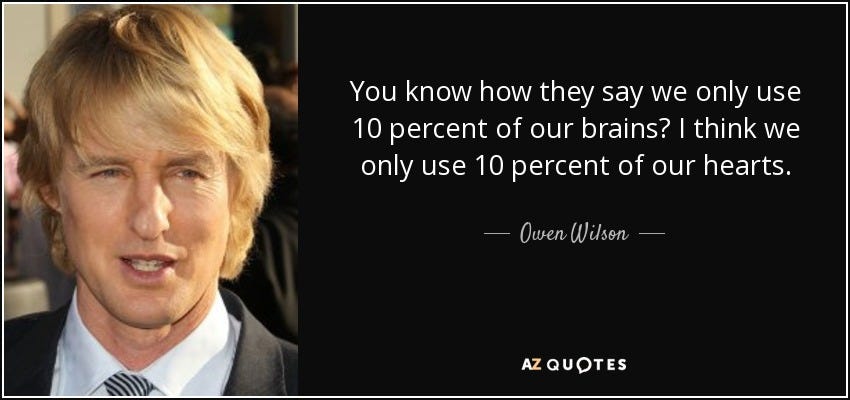
I’m going to start this out by debunking a popular myth. You have heard that you only use 10% of your brain. That is completely wrong. You are using your entire brain every day. You’re even using a good deal of it when you’re asleep. You might not be using all the cells all the time, but throughout a day, you will use all of your brain. In fact, even though your brain is only 2% of your body weight, it will account for 20% of your daily energy usage.
So let’s talk about learning to read. As you’ve probably noticed if you’ve been reading this column for a while, there is no one area in your brain that is dedicated to reading. Reading is accomplished by connecting and synchronizing different parts of your brain. It’s a complicated ballet carrying out what seems to us to be one simple task.
We also learned recently that reading was never on the menu for prehistoric man, so when language and then written language came along, the brain had to adapt. It took the parts used for pattern recognition and used them to recognize a new kind of pattern. Instead of looking out for danger, it was now decoding symbols. Pattern recognition happens in some of the oldest areas of the brain, the parts we sometimes refer to as the reptilian brain.
OK, I think I’ve set you up for today’s deep dive into reading research, a 2017 study from the Max Planck Institute for Psycholinguistics. They wanted to find out what happens in the brain when an illiterate person in their 30s learns to read.
“Until now it was assumed that these changes are limited to the outer layer of the brain, the cortex, which is known to adapt quickly to new challenges,” says project leader Falk Huettig from the Max Planck Institute for Psycholinguistics. But that is not at all what they found.
The study was done on 39 women in India. “At the beginning of the training, the majority of them could not decipher a single written word of their mother tongue Hindi. Hindi, one of the official languages of India, is based on Devanagari, a scripture with complex characters describing whole syllables or words rather than single letters.”
After just 6 months of training, the women had been able to learn to read at a first grade level. This may not seem like much to you, but it is a huge accomplishment. In the U.S., we spend an entire year of school teaching kids 26 letters and the phonemes that they represent before we proceed to teach them to sound out words in 1st grade. There are double that number of characters in the Hindi alphabet. In 6 months, these women achieved the equivalent of what we in the U.S. expect children to accomplish in 2 years.
As part of the study, women were required to have brain scans so that researchers could visualize what was happening in the brain as they learned. “In contrast to previous assumptions, the learning process leads to a reorganisation that extends to deep brain structures in the thalamus and the brainstem.” These, as I mentioned earlier, are older areas of the brain and, unlike the once-taught idea that the brain could not change significantly after the age of 5, this study proved that the thalamus and brain stem can reorganize to learn completely new skills. Amazing!
Why is This Important?
One of the deficits that has been theorized as contributing to dyslexia, a learning disability that affects reading, writing and spelling, is a dysfunction of the thalamus. This provides researchers new avenues for further study about the cause and treatment of dyslexia.
As long time readers of this column know, I equate reading with equity and justice. Here are some eye opening statistics on the social cost of dyslexia in the U.S.:
A high percentage of inmates (approximately 48%) are estimated to have dyslexia, contributing to the costs of incarceration and recidivism.
Only 35% of adults with low literacy skills are actively employed. If employed, adults with dyslexia average less than $28,000 in annual earnings.
Dyslexic individuals are at higher risk for substance abuse and homelessness.
Undiagnosed individuals face higher rates of anxiety, frustration, shame, and low self-esteem.
Untreated dyslexia leads to significant lost economic potential, with studies indicating a $1 trillion cost over 60 years in California alone, primarily through lost productivity and unemployment.
School systems incur expenses for special education services, while legal costs arise from litigation regarding educational support.
If you’re dyslexic or have a family member who is dyslexic, this research is reason to hope. You can learn how to advocate for continued research into the causes and treatment of dyslexia through the International Dyslexia Association. You’ll also find educational materials and support opportunities at the site.

Today’s Reading
FICTION BOOKS
What is Left the Daughter by Howard Norman #WWII #Murder #LiteraryFiction #Audiobook
Carpe Jugulum by Terry Pratchett #Discworld #Series #Witches #Fantasy #Audiobook
Babel Tower by A.S. Byatt #Literature #PrintBook #TriggerDomesticViolence #TriggerCult #TriggerChildAbuse #TriggerSuicide #TriggerChildEndangerment
Les Misérables by Victor Hugo #BookClub #Audiobook #HistoricalFiction #Classic #France #Literature
SHORT STORIES
“Queen Hortense” by Guy de Maupassant
NONFICTION BOOKS
The Gift of Years: Growing Older Gracefully by Joan Chittister #SelfHelp #Aging #EBook
How to Write Best-Selling Fiction by James Scott Bell #TheGreatCourses #Writing #HowTo #Audiobook
Building Fantasy Cities by Angeline Trevena #Ebook #WorldBuilding
POETRY
The Children’s Hour by Henry Wadsworth Longfellow
ARTICLES AND OTHER NON-BOOK READING
Woman of the Day:
Imani Perry (born September 5, 1972) is an American interdisciplinary scholar of race, law, literature, and African American culture. She is currently the Henry A. Morss, Jr. and Elisabeth W. Morss Professor of Studies of Women, Gender and Sexuality and of African and African American Studies at Harvard University, a Carol K. Pforzheimer Professor at the Harvard Radcliffe Institute, and a columnist for The Atlantic. Perry won the 2022 National Book Award for Nonfiction for South to America: A Journey Below the Mason-Dixon to Understand the Soul of a Nation. In October 2023, she was named a MacArthur Fellow.
INFORMATION GATHERING ~ NOT READING
Quotes
There are only four kinds of people in the world: those who have been caregivers, those who are currently caregivers, those who will be caregivers, and those who will need caregivers. — Rosalynn Carter
Journaling Prompts
Who needs my care right now?
Vocabulary
Putative (adj) is a formal word used to describe something that is generally believed, supposed, or assumed to be something specified. It is always used before a noun.
The group’s putative leader was conspicuously absent from the meeting.
“... the painting is swept up in questions of identity, provenance, authenticity and putative value.” — Manohla Dargis, The New York Times, 31 Oct. 2025
There’s no need to make assumptions about the root behind putative—we know it comes from a form of the Latin verb putare, which means “to consider” or “to think.” Putative is a rather formal word that has been part of English since the 15th century. Like apparent, presumed, and ostensible, it leaves room for a smidgen of doubt: a putative ally will very probably be there for you, and a putative successor is very likely to be the next one in charge, but life offers no guarantees in either case.

Thanks for reading with me today. I’d love to hear from you about your reading journey, and especially what you’re reading right now.

Whst was once believed (and used to further a system) is proved to be false. Therefore a belief based on that belief may also be false, not true.
Great essay and it really resonated with my experience. For me it caused so many issues especially low self esteem. Fortunately or unfortunately, the lack of a solid educational background developed and unhealthy hustle in me that allowed me to advance my career fairly quickly. Which then developed the substance abuse. 😑
My daughter was diagnosed in 2nd grade a teacher clocked it pretty quickly and the school had a special education department that provides extra help.
I'm so greatful her experience will be a different.