
Day 83: Does Teaching Handwriting Help Kids Learn to Read?
Bring back pencil and paper in the early grades

“If a book is well written, I always find it too short.”
― Jane Austen, Sense and Sensibility

Welcome to A Reading Journey. This is a blog about reading. Not books, book reviews, author interviews, or any of that good stuff. That’s for other blogs. This blog is about reading. I hope that by sharing my reading journey, you might find yourself reading more or differently.

Reading Tips
Tip 101: Does Teaching Handwriting Help Kids Learn to Read?
According to a 2025 study, teaching handwriting does help kids learn to read. Let’s take a look at the study.
Researcher Joana Acha used existing classroom computers and software to study this in 5 to 6 year old students. “As children write less and less by hand, we wanted to explore the impact of this on alphabetic and orthographic skills. In other words, we wanted to see whether the ability to learn letters and to assimilate and remember word structure develops differently through manual training or the use of keyboards. We concluded that the children who used their hands obtained the best results,” explained researcher Joana Acha.
A couple of definitions:
Alphabetic: the foundational understanding that there are systematic, predictable relationships between written letters (graphemes) and spoken sounds (phonemes).
Orthographic: the visual writing system of a language—how letters, spelling patterns, and sequences are arranged to represent spoken language.
OK, let’s take a look at how the study was done. “50 children with basic reading comprehension were taught 9 letters of the Georgian and Armenian alphabets, as well as 16 pseudowords invented by the researchers by combining the letters.
“The aim was to use letters and words that were completely new to the children to make sure they were learning from scratch. In fact, the studies carried out so far used the alphabets in the children’s culture, so it is not so easy to find out the extent to which they did not know the symbols presented,” said Acha.”
By using unfamiliar letters and words, the study design removed confounding variables that were present in previous studies. Very good. Continuing on…
All 50 children learned the same letters and words, but half copied them out using pencil and paper and the other half used a keyboard. This specifically looked at how the movements of the hand correlated with language learning. Then they assessed how much each group had learned.
“Once we had taught each group of children the new letters and words and trained them using one method, we submitted them to three tests to assess the knowledge acquired. We measured their ability to identify, write and pronounce both the letters and the pseudowords, and the results clearly indicated that those who had practised manually developed greater skill. In particular, the difference was clear with the pseudowords; almost everyone who had learnt on computer did not complete the exercises on letter sequences correctly. So our work confirms that the graphomotor function is essential in memorizing letters and word structures,” explained Acha.
They further subdivided the groups, so that half of the computer group always saw the same font on screen, but the other had different fonts. Half the handwriting group used paper with the letters already there in dotted lines, and the other just wrote freely on the lines.
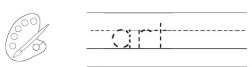
Doing it this way still showed that the handwriting group had better results, but between the two handwriting subgroups, the group that wrote freely did better.
“So we concluded that while it helps children to have to trace in order to practice at first, once they’re able to make more or less small, precise movements, it’s advisable to move on to free writing. However, what is most clear is the need to prioritize manual practice in the learning processes. They learn best from hand movements and so technological devices should only be used in a complementary way,” said Acha.
If you’ve got children in this age group, and your school is pushing a digital classroom, it’s worth showing this research to your teacher and the PTO. Digital tools have a place in the classroom, but handwriting with pencil and paper should be the chosen tools for the reading skills portion of the class.
Today’s Reading
FICTION BOOKS
Sense and Sensibility by Jane Austen #Classic #BookClub #ReRead #Audiobook
Memory and Dream by Charles de Lint #ChildAbuse #Violence #Fantasy #Series #Audiobook
Sooz by Peter S. Beagle #Fantasy #Series #Novella #Audiobook
Babel Tower by A.S. Byatt #Literature #PrintBook #TriggerDomesticViolence #TriggerCult #TriggerChildAbuse #TriggerSuicide #TriggerChildEndangerment
Les Misérables by Victor Hugo #BookClub #Audiobook #HistoricalFiction #Classic #France #Literature
SHORT STORIES
“Waiter, a Bock” by Guy de Maupassant
NONFICTION BOOKS
Proust and the Squid: The Story and Science of the Reading Brain by Maryanne Wolf #Reading #Neuroscience #Audiobook
POETRY
A Duet by T. Sturge Moore
ARTICLES AND OTHER NON-BOOK READING
Woman of the Day:
Kalki Koechlin (born 10 January 1984) is a French actress who works in films and stage. Known for her unconventional body of work, primarily in Hindi films, she is the recipient of several accolades, including a National Film Award and a Filmfare Award. Although a French citizen, she has been raised and lived most of her life in India.
INFORMATION GATHERING ~ NOT READING
Quotes
Everything’s miraculous if my heart is open enough and I’m present enough to receive it. — Mark Nepo
Journaling Prompts
If I were to approach today as if it were the very first day of my life, what might shift?
Vocabulary
Undulate (v) is a formal word that means “to move or be shaped like waves.”
On the approach to the tulip festival, visitors are greeted by a large field of the colorful flowers undulating in the wind.
“When sufficiently heated, the fresh cheese contracts, sweating whey from the curds that provides liquid to cook the dough, which will plump up and undulate slightly as it expands.” — Karima Moyer-Nocchi, The Epic History of Macaroni and Cheese: From Ancient Rome to Modern America, 2026
Undulate and inundate (“to cover something with a flood of water”) are word cousins that flow from unda, the Latin word for “wave.” No surprise there. But would you have guessed that abound, surround, and redound are also unda offspring? While their modern definitions have nothing to do with waves or water, at some point in their early histories, they all meant “to overflow,” and caught a wave from there.

Thanks for reading with me today. I’d love to hear from you about your reading journey, and especially what you’re reading right now.
